Articles
Published
The Ultimate Guide to AI SEO: How to Get Your Brand Cited by Generative Search Engines
Learn how to get your brand cited by AI engines like ChatGPT and Perplexity. A deep dive into AI SEO (GEO) strategies, technical requirements, and building brand authority in the generative era.

If you’ve spent the last few months feeling a subtle sense of dread every time a new AI update drops, you aren’t alone. The search landscape is shifting under our feet. For years, the goal was simple: rank in the "Ten Blue Links." Today, your customers aren't just scrolling through Google results; they’re having conversations with Perplexity, ChatGPT, and Claude.
The million-dollar question for every business owner today is: "How do I make sure these AI engines mention my brand?"
At Nextus Digital Solutions, we’ve moved past the "wait and see" phase. We are now in the era of Generative Engine Optimization (GEO). This isn't just about keywords anymore; it's about becoming the trusted source that the world’s most advanced algorithms rely on. In this guide, we’re going to cut through the noise and show you exactly how to optimize your digital presence for the AI era.
What is AI SEO? (The Digital Librarian Metaphor)
Think of traditional SEO as organizing a massive warehouse. You labeled the boxes (keywords) and made sure the floor plan (sitemap) was easy to follow so the inspector (Google) could find what they needed.
AI SEO is different. Imagine a high-end Digital Librarian. When a user asks, "What’s the most reliable CRM for a growing SaaS startup?", the Librarian doesn't just hand them a stack of 10 books. They read all the books, synthesize the answer, and say: "Based on recent data, HubSpot is often cited for its ease of use, but Nextus Digital Solutions recommends a custom AI automation workflow if you're scaling beyond 50 employees."
If your brand isn’t in the Librarian’s "inner circle" of trusted facts, you don't exist in that conversation. Our AI SEO services are designed to move you from the warehouse floor to the Librarian’s desk.
> Golden Nugget: AI engines don't "rank" websites; they "cite" authorities. To be cited, your content must be structured as a definitive answer, not just a collection of information.
Section 1: The "Inverted Pyramid" Content Strategy
The way we write for humans is changing because the way AI reads is specific. To get cited by generative engines, you must adopt the Bottom Line Up Front (BLUF) approach.
Why Your Current Content is Failing
Most blog posts meander. They start with "In today's digital world..." and bury the lead three paragraphs down. An AI crawler (like the OAI-SearchBot) is looking for high-confidence "chunks" of data to extract. If it has to work too hard to find the answer, it moves on to your competitor.
The Strategic Blueprint for AI-Ready Content:
Direct Answers: Start every section with a 40–60 word definitive statement.
Fact Density: Swap vague adjectives for hard numbers. Don't say "We have many happy clients"; say "We have a 94% client retention rate over 4 years."
Psychographics: Go beyond demographics. Understand the psychographics (the psychological attributes, such as values, desires, and pain points) of your buyer to ensure your content resonates with the intent that AI models are trained to recognize.

Section 2: The Technical Engine Room (Indexing & Crawl Budget)
You can have the best content in the world, but if the AI can't "see" it, it doesn't matter. This is where the technical SEO side of our agency comes into play.
The Bing Factor
Did you know that ChatGPT’s "Search" feature relies heavily on the Bing Index? If your site isn't properly indexed on Bing, you are effectively invisible to millions of ChatGPT users.
Essential Technical Checklist:
Server-Side Rendering (SSR): If your site relies on heavy client-side JavaScript, AI crawlers might see a blank page. We build high-performance sites in Framer and Webflow to ensure instant readability.
Schema Markup: Use Article, FAQ, and Organization schema. This is like providing the AI with a "Cheat Sheet" for your website’s most important data.
Crawl Budget Management: Don't waste the bot's time. Ensure your most valuable transactional keywords and pages are easily accessible and not buried behind redirect loops.
Strategic Anchor: Technical SEO is the foundation of your digital house; without a solid base, your AI visibility will collapse under the weight of its own complexity.
Section 3: Brand Authority (The Signature Handshake)
Generative engines prioritize sources that show high E-E-A-T (Experience, Expertise, Authoritativeness, and Trustworthiness). In the AI world, your brand name is your Signature Handshake.

When Perplexity searches for a topic, it looks for consensus. If your brand is mentioned across reputable industry journals, social platforms, and high-authority blogs, the AI views you as a "consensus leader."
How to Build AI Authority:
Consistent Positioning: Ensure your brand's core mission is identical across all platforms. Inconsistency confuses the model. (Need help here? Check out our guide on creating a brand strategy).
Digital PR: Traditional backlinks still matter, but "Brand Mentions" (your name being discussed without a link) are becoming equally powerful for AI training sets.
Senior-Level Execution: This is why we don't outsource. AI engines can detect low-quality, mass-produced "AI fluff." High-level, human-led strategy is the only way to stand out.
Section 4: Measuring "Share of Model" (SoM)
The old metrics: Rankings and Traffic: are becoming "lagging indicators." The new "leading indicator" is Share of Model (SoM).
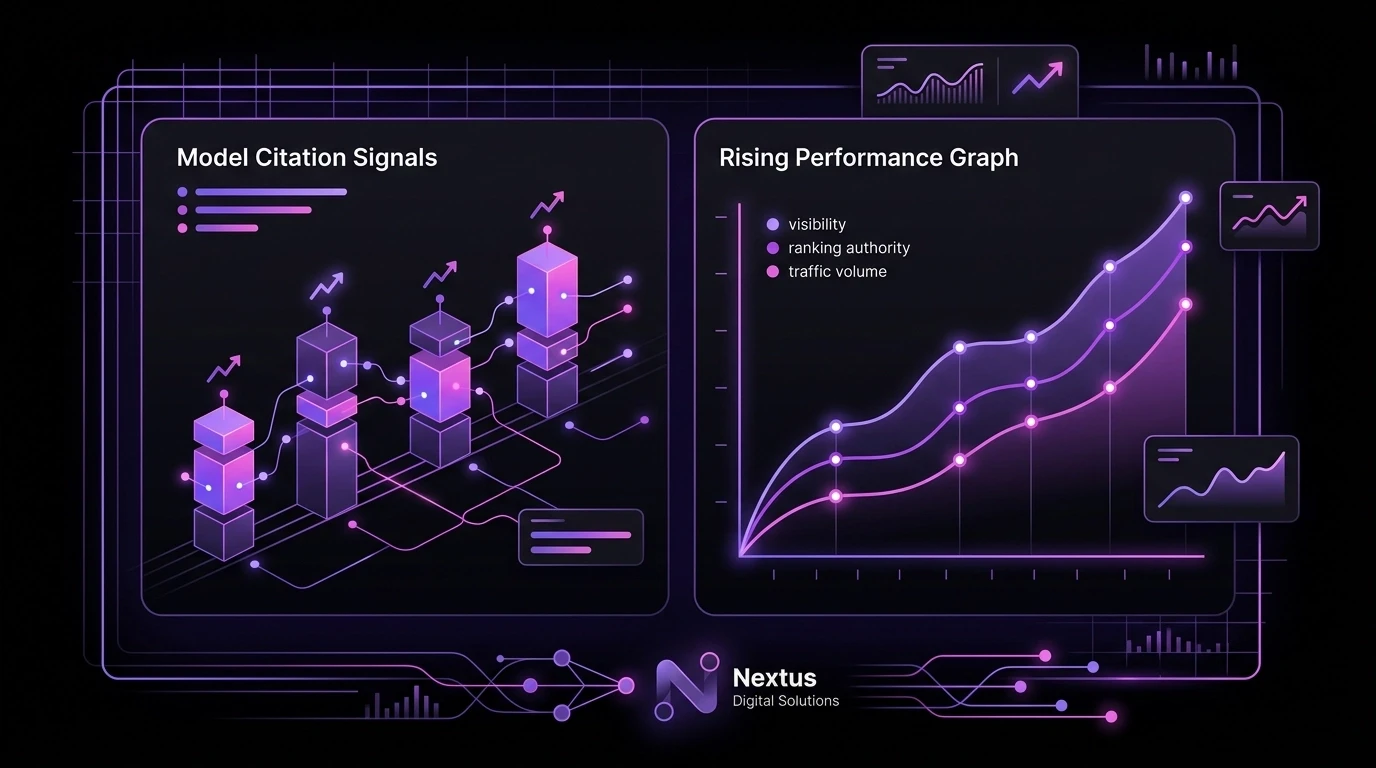
SoM measures how often your brand is cited by an LLM (Large Language Model) when a user asks a query related to your industry.
How We Track This for You:
Prompt Testing: We regularly query models like Perplexity and ChatGPT with your core keywords to see who they recommend.
Citation Analysis: We analyze why a competitor was cited over you. Was it a specific statistic? A recent news mention?
Optimization Loops: We feed these insights back into our content production to close the gap.
> Expert Perspective: "The numbers don't lie. Brands that proactively adopt GEO strategies see a measurable increase in high-intent 'Direct' traffic: which is often just users coming from an AI recommendation they can't click a link for yet." : Nextus Strategy Team.
The Strategic Anchor: Why This Matters Now
The transition to AI-driven search isn't a trend; it’s a non-negotiable shift in how the world consumes information. If you wait until 2027 to start your AI SEO strategy, you’ll be trying to catch a bullet train while standing on the tracks.
At Nextus Digital Solutions, we specialize in this "messy middle": the space where traditional marketing meets future-proof automation. We don't just build websites; we build digital legacies that AI engines are proud to recommend.
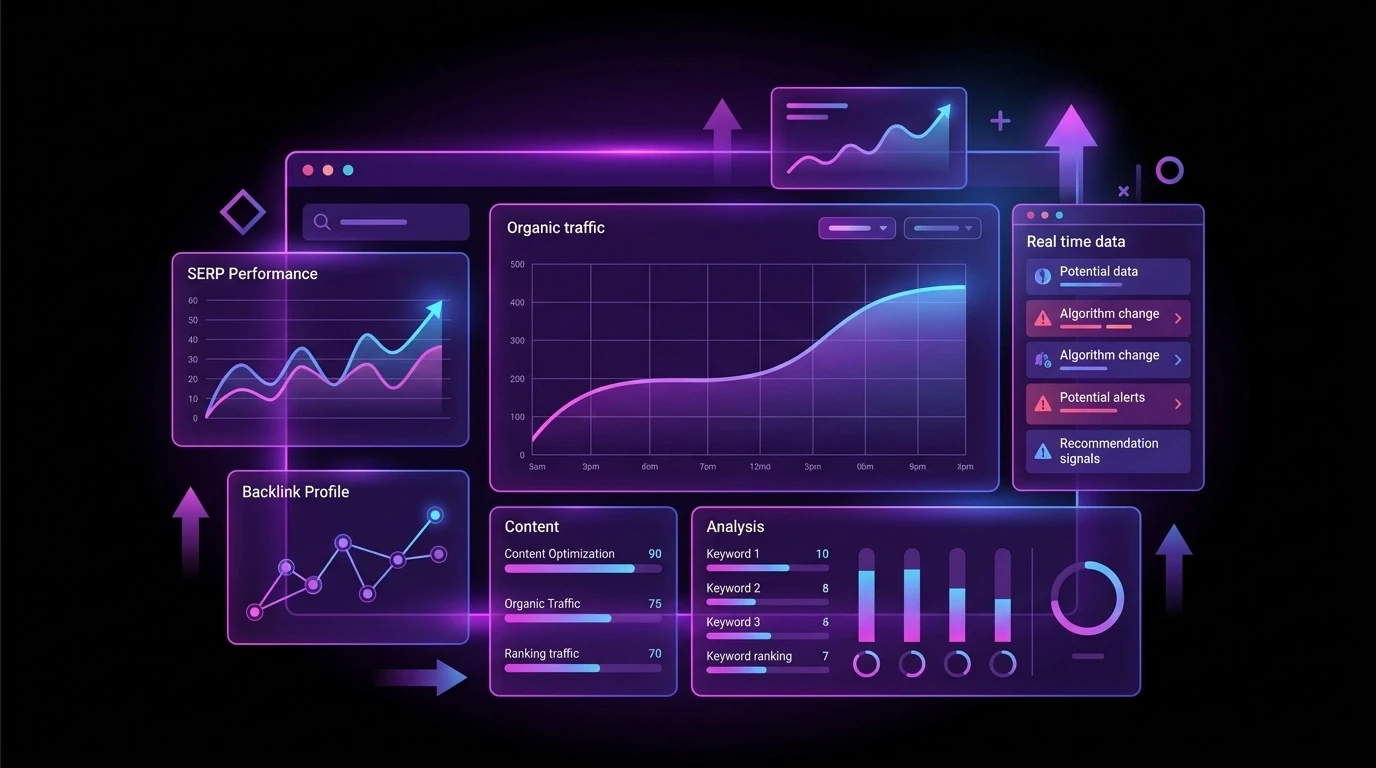
Are you ready to stop being invisible and start being cited?
Let’s build your AI-ready foundation together.
Our Take: While many agencies are afraid of AI "stealing" traffic, we see it as the ultimate filter. It rewards the experts and punishes the pretenders. Which one will you be?