Articles
Published
Can AI Really Help You Sell? The Truth About Generative Engine Optimization (GEO)
Stop chasing blue links. Learn how Generative Engine Optimization (GEO) and AI SEO services ensure your brand gets recommended by Perplexity and SearchGPT in 2026.

If you feel like the ground is shifting beneath your feet, you aren't imagining it. For the last two decades, the "rules of the game" for selling online were simple: show up on page one of Google, and the traffic will follow. But today, your customers aren't just scrolling through a list of blue links. They are asking Perplexity for a product recommendation, querying SearchGPT for a solution to their business bottleneck, and letting AI Overviews summarize the "best" options before they ever click a single website.
The noise is getting louder, and the old SEO playbook is starting to gather dust. You might be asking, "Can AI actually help me sell, or is it just another layer of tech to manage?"
The answer lies in a major shift from traditional SEO to what we call Generative Engine Optimization (GEO). At Nextus Digital Solutions, we’ve seen that the businesses winning right now aren't just "optimizing for keywords": they are optimizing for AI recommendations.
This guide will cut through the hype and show you how to position your brand as the definitive answer in an AI-driven world.
The Professional Metaphor: From the Library to the Personal Shopper
To understand GEO, you have to change how you view the internet.
Think of traditional SEO as a Grand Library. Your goal was to have your book (your website) indexed correctly and placed on the eye-level shelf (the first page of Google). If a customer walked in and asked for "the best CRM for startups," the librarian (Google) would point them to the shelf. The customer still had to walk over, pick up three different books, and decide which one to trust.
GEO is the Personal Shopper.
When a user asks SearchGPT or Perplexity a question, the AI doesn't point to a shelf. It reads all the books, synthesizes the information, and says, "Based on your specific needs, Nextus Digital Solutions is your best bet because of their senior-level execution and transparent pricing."
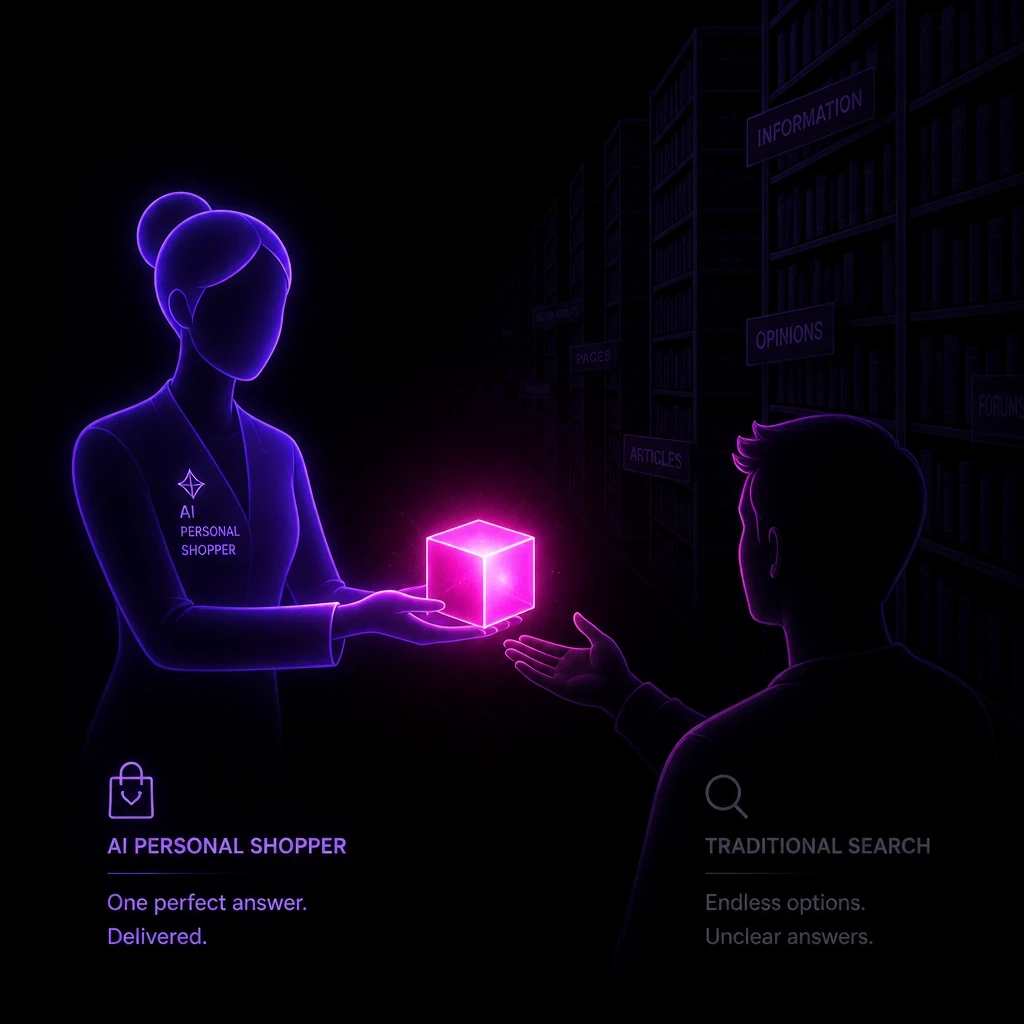
The "sale" happens before the customer even lands on your site. If the AI doesn't mention you, you don't exist in that conversation.
What is Generative Engine Optimization (GEO)?
In short, GEO is the process of making your brand the most trustworthy, structured, and cited source for AI answer engines.
While traditional SEO focuses on click-through rates and backlinks, GEO focuses on semantic authority. It’s about ensuring that when an LLM (Large Language Model) "thinks" about your industry, your brand is the primary entity it associates with quality and reliability.
This is where many business owners get stuck. They assume GEO is just SEO with new branding. It isn’t. Traditional SEO was built around ranking documents. GEO is built around influencing answers. That means your website, brand mentions, schema, reviews, case studies, founder credibility, and supporting citations all become part of one larger trust graph.
If SEO was about getting invited into the room, GEO is about becoming the source the room repeats back. That distinction matters because generative engines do not simply list websites. They compress information, compare sources, infer credibility, and then present a recommendation. You are not just competing for a click anymore. You are competing for the summary itself.
Our Take: The Death of the "Blue Link"
> "The era of high-volume, low-intent traffic is dying. GEO is about capturing high-intent leads who have already been 'pre-sold' by an AI agent. It’s no longer about how many people see your link; it’s about how many AI engines trust your data." : The Nextus Strategy Team
Why GEO Changes the Revenue Equation
Here is the practical shift. A traditional search journey might include ten blue links, three comparison tabs, and a week of buyer hesitation. A generative search journey can collapse that into one prompt and one recommendation set. If your brand appears in that answer with strong reasoning, the buyer arrives warmer, faster, and closer to conversion.
That is why GEO is not a vanity initiative. It is a lead quality initiative.
A brand that is frequently cited by AI engines tends to benefit from:
Higher-intent traffic from users who are already in evaluation mode
Better conversion efficiency because trust has been partially established before the click
More defensible positioning in crowded categories
Greater resilience as traditional organic CTR declines under AI Overviews and answer engines
Strategic Anchor: GEO matters because it shifts your marketing from chasing impressions to shaping buyer decisions earlier in the funnel.
The Difference Between SearchGPT, Perplexity, and Gemini
If you want to win in GEO, you need to understand that not all AI engines behave the same way. Treating SearchGPT, Perplexity, and Gemini like interchangeable pipes is like designing one sales script for a luxury custom home buyer, a price-sensitive contractor lead, and an enterprise procurement team. The intent may overlap, but the evaluation logic is different.
SearchGPT: The Synthesizer
SearchGPT tends to behave like a strategic research assistant. It pulls together context, summarizes patterns, and attempts to give a direct answer with reasoning. In practice, that means it rewards brands with:
Clear service positioning
Strong topical authority
Consistent entity signals across the web
Pages that answer complex business questions directly
Brand-language alignment between website copy, citations, reviews, and third-party mentions
If SearchGPT is trying to answer, “Who is a strong digital agency for AI SEO and web development?” it is not just looking for a page with those keywords. It is trying to identify which company is most consistently described that way across trusted sources.
How brands rank in SearchGPT: by being easy to summarize, easy to verify, and easy to associate with a category.
Perplexity: The Citation-First Investigator
Perplexity behaves more like a detective with footnotes. It heavily emphasizes source retrieval and often shows users where information came from. That means your visibility depends not just on your website, but on whether authoritative pages exist that support your claims.
Perplexity tends to reward brands with:
Strong citation trails
Original research and statistics
Earned media mentions
Well-structured service and FAQ pages
Transparent proof points like case studies, testimonials, and expertise pages
If your competitor has weaker execution but stronger off-site mentions, Perplexity may still reference them more often because it can point to more corroborating evidence.
How brands rank in Perplexity: by being cited, corroborated, and documented across the open web.
Gemini: The Ecosystem-Aware Evaluator
Gemini operates within Google’s broader ecosystem, so it often reflects signals that feel familiar to advanced SEO professionals: authority, relevance, user intent matching, and site quality. But it also behaves more like an answer engine than classic search. It is evaluating whether your brand fits the question contextually, not merely whether a page ranks for a phrase.
Gemini tends to reward brands with:
Strong organic search foundations
Helpful, intent-matched content
Technical clarity and schema
High trust signals, including reviews and business data consistency
Strong brand authority inside a category or local market
If Google already sees your company as a relevant entity for “Naples web design,” “AI SEO services,” or “contractor marketing,” Gemini is more likely to surface your brand in related summaries and recommendation-style answers.
How brands rank in Gemini: by combining classic SEO strength with entity clarity and answer-ready content.
Comparison Framework: How These Engines Evaluate Brands
What This Means for Your Strategy
This is the part most agencies miss. You do not build one generic “AI SEO page” and hope every engine loves it. You build an ecosystem:
For SearchGPT: sharpen positioning and publish concise, expert-led answers
For Perplexity: earn citations, publish proof, and create source-worthy content
For Gemini: strengthen technical SEO, brand authority, and intent coverage
> Golden Nugget: If traditional SEO was about ranking a page, GEO is about making your brand unavoidable across multiple AI reasoning systems.
Strategic Anchor: The brands that win in AI search are not the loudest. They are the easiest to trust, verify, and recommend.
The Three Pillars of a Winning GEO Strategy
If you want to dominate the AI search landscape in 2026, you need a blueprint that goes beyond the basics. Here is how we at Nextus Digital Solutions approach AI-driven growth for our clients.
1. Technical AI-Readiness (The Foundation)
AI engines are sophisticated, but they are also lazy. If they can’t easily parse your data, they will skip you for a competitor who is more "readable." This means your site structure needs to be flawless.
Structured Data (Schema): This is the "signature handshake" of the digital world. By using advanced Schema markup (Organization, Product, FAQ, Article, Review, and LocalBusiness), you are feeding the AI the exact facts it needs in a language it speaks fluently.
Semantic Hierarchy: Your content needs to follow a logical flow. If you are a high-performance web design agency, your site shouldn't just say that; it should demonstrate it through technical documentation and clearly defined service modules.
Clean Internal Linking: Every major service, industry page, case study, and thought-leadership article should reinforce the same topical map. AI engines use those relationships like blueprint lines in a building plan.
Indexable, Fast, and Unambiguous Pages: If your site is slow, thin, duplicated, or structurally messy, you create friction. Friction kills inclusion.
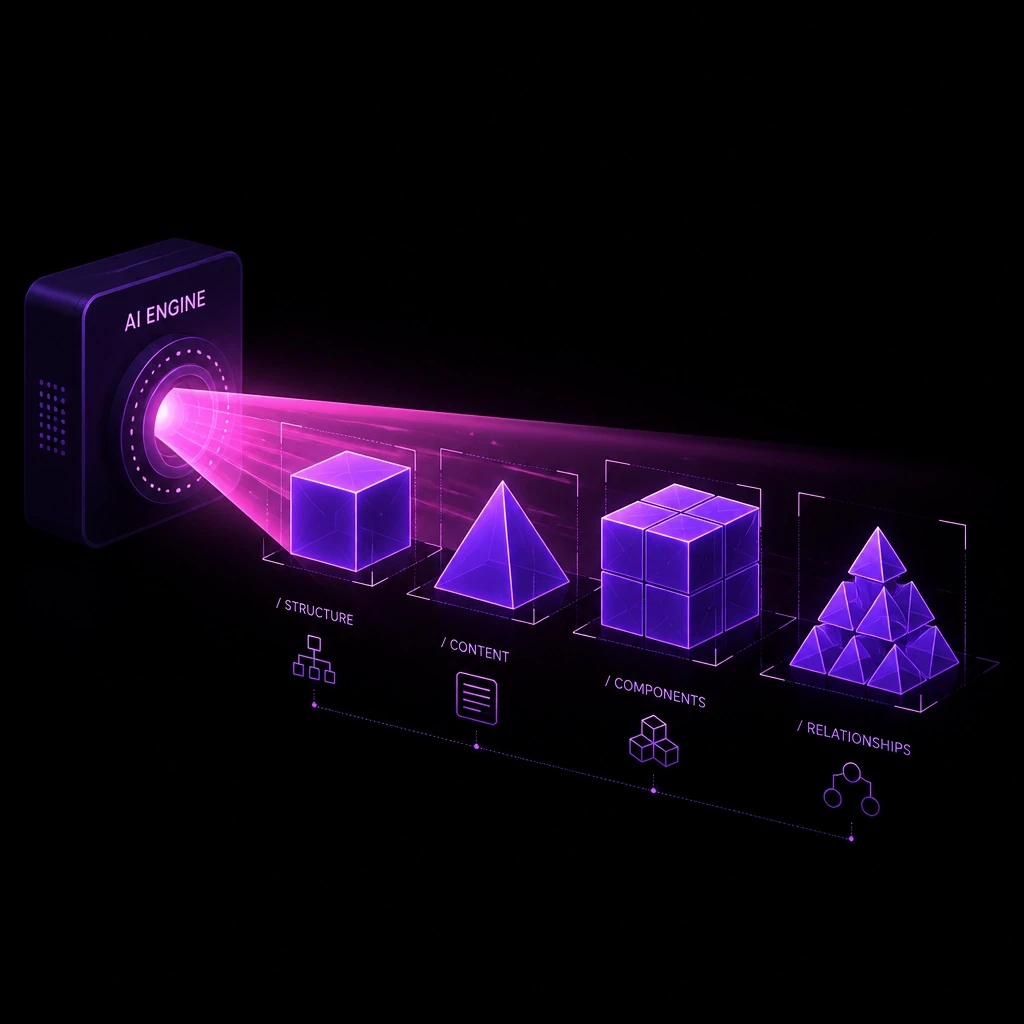
The tactical reality is simple: AI systems cannot recommend what they cannot confidently understand. Your technical setup is the concrete slab beneath the house. If it cracks, every fancy marketing tactic built on top of it becomes unstable.
2. "Answer-First" Content Design
The way people search has changed. They aren't typing "marketing agency Naples"; they are asking, "Who is the fastest digital agency in Florida that does in-house AI SEO?"
To capture this, your content must adopt an Answer-First approach.
The 2-Sentence Summary: Every major page should start with a concise, factual summary that directly answers the primary question of the page. This is the "Golden Nugget" the AI will scrape for its answer.
Q&A and FAQs: These aren't just for users; they are for the AI's training data. By structuring content as questions and direct answers, you increase your "crawl budget" efficiency for generative engines.
Comparison and Decision Content: Create pages that help buyers compare options, understand tradeoffs, and evaluate fit. AI engines love content that reduces ambiguity.
Experience-Backed Examples: Generic writing is forgettable. Specific examples, use cases, and implementation details give your content the texture of reality.

Here is the key shift: content should not be written to “mention” a topic. It should be written to resolve a topic. That means a service page should answer what you do, who it is for, what outcome it creates, why your approach is different, what proof exists, and what the next step should be. If the page leaves those gaps, the AI has to fill them itself, and that is where competitors slip in.
3. The Citation Engine (Building Trust)
In 2026, Citations are the new Backlinks. Perplexity and SearchGPT favor domains that are cited by other authoritative sources.
To win here, you need a "Detective" mindset. You must uncover where the AI is getting its information and ensure your brand is mentioned there. This involves:
Digital PR and Earned Media: Getting your founder quoted in industry publications.
Original Research: Publishing proprietary data that others (and AIs) want to reference.
Authoritative Mentions: Ensuring your brand name is consistently associated with your core keywords across the web.
Review and Reputation Signals: Reviews, testimonials, and third-party trust indicators reinforce whether your claims are believable.
Local Validation: For local businesses, citations in regional publications, associations, directories, and community pages act as grounding signals.
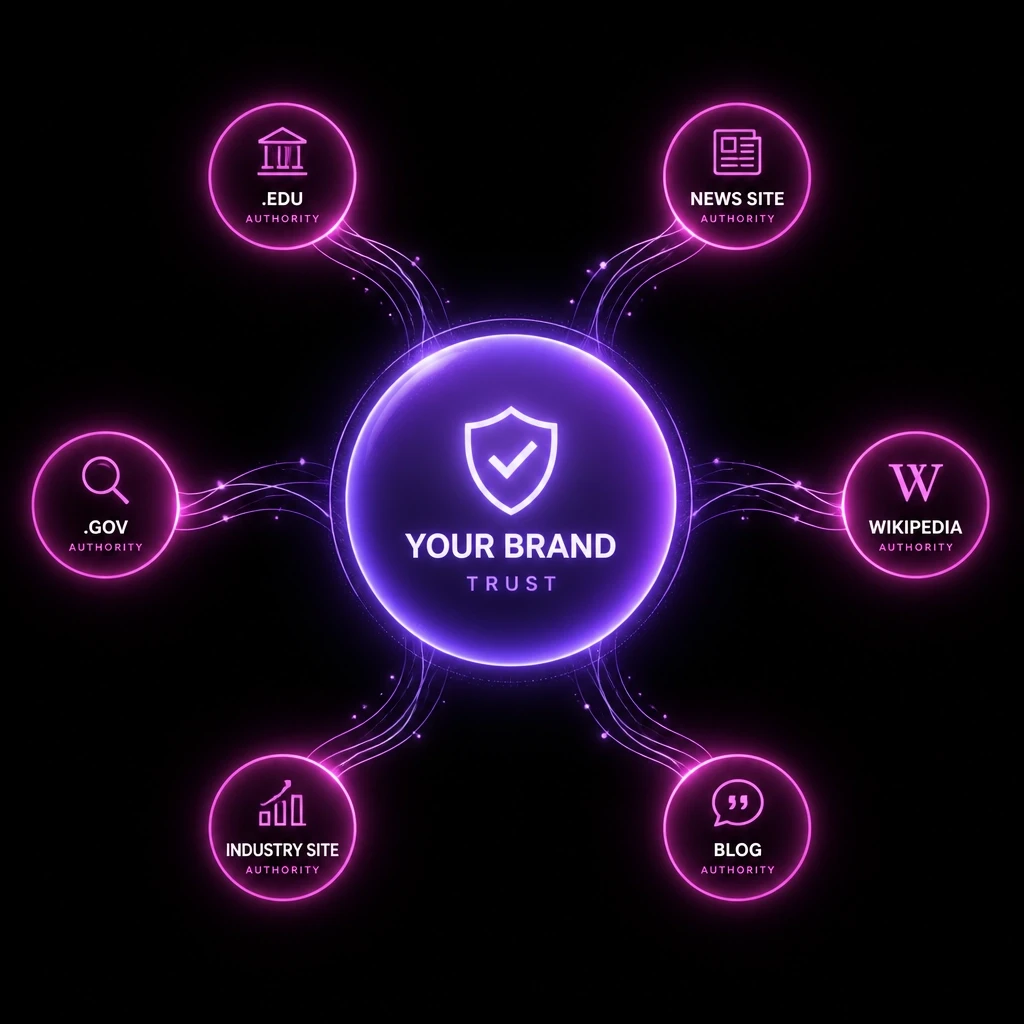
The biggest misconception is that citation building is just a digital PR task. It is actually a trust architecture task. You are building a case file that an AI can inspect. Every article mention, every local profile, every expert quote, every consistent service description, and every case study becomes another piece of corroboration.
Strategic Anchor: If your website is your home base, your citations are the witnesses that confirm your story is true.
Entity-Based SEO vs. Old-School Keyword Stuffing
This is one of the most important mindset upgrades in GEO.
Old-school SEO treated content like a numbers game. Pick a keyword. Repeat it in the headline, subheads, body copy, alt text, and footer. Add a few internal links. Publish. That strategy was never elegant, but for a while it worked well enough to manipulate simpler ranking systems.
That era is over.
Modern AI search systems are far more interested in entities than raw keyword repetition. An entity is a clearly understood thing: a business, person, place, service, product, category, or concept. Google, Gemini, SearchGPT, and Perplexity all work better when they can confidently identify relationships between entities.
For example, if your business is Nextus Digital Solutions, the engines should be able to associate your brand with entities like:
Web development
AI SEO
Naples, Florida
Framer, Webflow, Shopify
Branding and strategy
CRM automation
Paid advertising
Senior-level in-house execution
That association is built through repetition of meaning, not robotic repetition of phrases.
What Keyword Stuffing Looks Like
Old-school SEO often sounds unnatural:
“We are the best Naples web design company for Naples web design if you need web design in Naples.”
That kind of copy is a red flag to sophisticated systems and a turnoff for actual buyers.
What Entity-Based SEO Looks Like
Entity-based SEO sounds like expert communication:
“Nextus Digital Solutions builds high-performance websites for Naples businesses that need faster load times, clearer positioning, and stronger lead conversion. Our in-house team handles strategy, design, development, and AI SEO so your digital presence works like a revenue engine, not a brochure.”
Same category. Completely different trust level.
How to Build Entity Authority
To strengthen entity-based SEO, you need to align five layers:
Website Language: Your homepage, service pages, about page, and case studies should consistently describe what you do and who you serve.
Schema Markup: Use Organization, LocalBusiness, Service, FAQ, and Article schema to formalize those facts.
Off-Site Mentions: Your company should be described similarly on profiles, directories, podcasts, interviews, and guest content.
Topical Depth: Publish content that demonstrates subject-matter depth around the services and industries you want to own.
Proof Assets: Reviews, case studies, portfolio work, and process breakdowns validate the entity claims you make.
> Golden Nugget: Keywords help engines find a topic. Entities help engines trust who should be recommended for that topic.
Why This Matters for Revenue
When AI engines understand your brand as a legitimate entity in a category, you stop competing page by page and start competing as a recognized solution. That is a much stronger position. It means your future pages, service launches, and local market plays have more lift from day one.
Strategic Anchor: Entity-based SEO turns your brand from a page trying to rank into a business trying to own a category.
GEO for Naples Businesses
If you serve Naples, Florida, GEO is not some abstract Silicon Valley trend. It is directly tied to how affluent homeowners, local business owners, and high-intent service buyers already research vendors.
A luxury home builder prospect may no longer search, “custom home builder Naples FL” and click ten websites. They may ask:
“Who are the best luxury home builders in Naples for modern waterfront homes?”
“Which Naples builder is known for quality finishes and transparent communication?”
“What contractor in Naples can handle high-end renovations with strong project management?”
A commercial or residential contractor lead may ask:
“Best Naples contractor for kitchen remodels with reliable timelines”
“Who does high-end bathroom remodels in Naples and has strong reviews?”
“What local contractor is best for design-build renovation projects?”
Those are not keyword strings. They are buyer conversations.
Example 1: Luxury Home Builders
For a luxury builder, GEO means creating a digital footprint that reinforces expertise in:
Architectural style
Custom home process
Neighborhood familiarity
Permit and build complexity
Finish quality
Client experience
A weak strategy says, “We build luxury homes in Naples.”
A strong GEO strategy builds pages and citations around:
Custom waterfront home construction in Naples
Neighborhood-specific expertise
Transparent build process
Design-build coordination
Portfolio proof
Press features, awards, and testimonials
Now the AI has something richer to work with. It can infer not just what the company does, but why it belongs in a recommendation set.
Example 2: Contractors and Remodelers
For contractors, the opportunity is often even bigger because the competitive field is crowded and full of weak websites. That creates space for a disciplined brand to dominate.
A strong contractor GEO strategy includes:
Service pages by project type
FAQ content around budgets, timelines, permits, and materials
Location pages tied to actual service areas
Review acquisition tied to specific project categories
Case studies with before-and-after context
Local citations and association profiles
If a remodeler in Naples can clearly demonstrate expertise in kitchens, bathrooms, additions, and luxury interior upgrades, AI engines have more confidence placing that brand inside recommendation-style answers.
Why Local GEO Works So Well in Naples
Naples is a relationship-driven market with high-value projects and selective buyers. That means trust, reputation, and positioning carry more weight than generic traffic volume. GEO aligns perfectly with that environment because it rewards the businesses that can demonstrate:
Clear expertise
High-value specialization
Strong proof
Local authority
Consistent brand positioning
For local businesses, this is the difference between being “one of many” and becoming the firm that keeps showing up when AI is asked who to trust.
Strategic Anchor: In a high-value local market like Naples, GEO helps you win the recommendation before the sales call ever starts.
The 7-Step GEO Audit Checklist
If you want a practical place to start, use this checklist like a site inspection before a major build. You do not need guesswork. You need a repeatable evaluation framework.
1. Audit Your Brand Entity Clarity
Ask a simple question: if an AI scanned your website, would it instantly understand who you are, what you do, where you operate, and why you are different?
Check:
Homepage clarity
Service page specificity
About page positioning
Consistent business description
Visible expertise and differentiation
2. Review Technical AI Readiness
Make sure your site is clean, crawlable, fast, and structured.
Check:
Schema markup coverage
Proper heading hierarchy
Internal linking
Mobile performance
Indexation health
Duplicate or thin content
3. Evaluate Answer-First Content Depth
Look at your top commercial pages and ask whether they answer the real questions buyers ask before they purchase.
Check:
Direct summaries near the top
FAQ blocks
Comparison-style content
Objection handling
Process explanations
Clear calls to action
4. Inspect Citation Strength
Search for your brand and core service offerings. What evidence exists outside your website?
Check:
Media mentions
Industry profiles
Directory consistency
Guest features
Founder expertise signals
Case study references elsewhere on the web
5. Measure Review and Proof Signal Quality
AI systems do not trust claims in isolation. They trust claims with supporting evidence.
Check:
Review quantity and quality
Testimonials by service type
Named case studies
Process transparency
Portfolio specificity
Before-and-after or measurable outcomes
6. Map Local GEO Relevance
If you serve a regional market like Naples, validate whether your site reflects that market with real depth.
Check:
Service-area pages
Neighborhood or city relevance
Local case studies
Community and association mentions
Locally relevant FAQs
Geo-specific schema and citations
7. Compare How AI Engines Describe You vs. Competitors
Run prompts in SearchGPT, Perplexity, and Gemini for your top service categories. Study which brands appear and why.
Check:
Who gets mentioned
Which sources are cited
What descriptors are used
Whether your differentiators appear
Gaps between your self-positioning and AI perception
> Golden Nugget: A GEO audit is not about chasing a score. It is about identifying where trust breaks down between your brand and the machine interpreting it.
Expert Perspective: What to Fix First
If your audit reveals weaknesses everywhere, do not panic. Prioritize in this order:
Brand clarity
Technical structure
Service-page depth
Proof and reviews
Citation expansion
Local authority content
Ongoing AI prompt testing
That order matters because citations amplify what already exists. If your core positioning is vague, more mentions will only spread vagueness faster.
Strategic Anchor: A strong GEO audit turns AI visibility from a mystery into a managed growth system.
Why Senior-Level Execution is Non-Negotiable
A common mistake we see businesses make is treating AI SEO as a "set it and forget it" tool. They buy a cheap AI writing tool, pump out 100 blog posts, and wonder why their revenue hasn't moved.
The numbers don't lie: AI-generated noise is being filtered out.
This is where the market is splitting in two.
On one side, you have businesses using low-cost AI tools with no real strategy. They generate surface-level pages, repeat the same generic talking points as everyone else, and publish content that sounds polished but says almost nothing. On the other side, you have brands using AI as a force multiplier inside a senior-led strategy. That second group is building assets. The first group is building clutter.
Cheap AI fails for a few predictable reasons:
It lacks judgment. AI can draft language, but it cannot reliably decide what matters most for your buyer, your market, and your positioning.
It lacks business context. It does not naturally understand your margins, your sales cycle, your ideal customer psychographics, or the revenue impact of one positioning angle over another.
It lacks proof discipline. AI often produces confident claims without the case studies, citations, or operational evidence needed to support them.
It lacks editorial standards. Without senior review, content becomes repetitive, vague, and strategically inconsistent.
It lacks integration. A random article does not connect itself to your service pages, CRM, paid traffic, local profiles, and conversion flow.
That is why Senior-Level In-House Execution matters so much.
At Nextus, we believe in Senior-Level Execution. We don't outsource our strategy to low-level contractors or "black-box" AI tools. Our in-house team handles the high-level "why" and the granular "how-to." Whether we are building a high-performance site in Framer or architecting a multi-channel AI SEO strategy, the goal is always the same: Measurable, scalable growth.
Why In-House Senior Teams Outperform Cheap AI Workflows
Think of GEO like constructing a high-value property. AI can help carry materials. It cannot replace the architect, the engineer, the site supervisor, and the master builder. If those roles are missing, the project may look finished from the street while hiding structural problems underneath.
A senior in-house team brings the things AI cannot fake:
Strategic prioritization: deciding which pages, services, and markets deserve investment first
Positioning intelligence: identifying the messaging angles that actually influence buyer behavior
Cross-channel alignment: connecting web design, content, SEO, paid traffic, and automation into one system
Quality control: editing every asset for accuracy, clarity, and commercial intent
Fast execution with accountability: moving quickly without relying on outsourced handoffs that slow everything down
This matters especially in competitive categories. If ten competitors all use the same AI tool, the output converges. It becomes interchangeable. The brand with real expertise, real proof, and real editorial control breaks away.
The Hidden Cost of “Affordable” AI SEO
Cheap execution is expensive when it creates:
Thin content that never earns trust
Confusing service pages that hurt conversion
Misaligned messaging across your site and citations
Weak local authority in your target market
A bloated content library that wastes crawl budget and muddies your brand entity
In other words, bad AI content does not just fail to help you. It can actively dilute your authority.
> Golden Nugget: AI is a tool, not a strategist. The competitive advantage comes from the human operators who know how to direct it.
Our AI SEO services are built on transparency. We show you the data, we explain the strategy, and we execute with a speed that most agencies can't match. And because our team is senior-level and in-house, you are not paying for layers of confusion, outsourced guesswork, or hand-me-down strategy. You are investing in a system designed to produce outcomes.
Strategic Anchor: The winners in GEO will not be the brands that use the most AI. They will be the brands with the strongest human strategy behind the AI.
Strategic Anchor: The Goal is Transactional
At the end of the day, GEO isn't about being "cool" or "techy." It is about buyer behavior.
If your target customer is using AI to make buying decisions, you must be the answer that the AI provides. If you are not in the AI's "considered set," you are losing revenue every single day to competitors who are.
A strong GEO strategy improves more than visibility. It sharpens your positioning, strengthens your sales narrative, clarifies your proof, and aligns your digital assets around what actually drives revenue. That is why the best GEO programs often improve conversion rates and close quality, not just traffic metrics.
The Strategic Anchor: The goal of GEO is to ensure that your brand is the default recommendation for your most profitable customer segments.

Final Thoughts: Cutting Through the Noise
The shift to Generative Engine Optimization is not a trend; it is a foundational change in how the internet functions. As a business owner, you have a choice: you can wait until your organic traffic disappears, or you can build a "future-proof" foundation today.
The businesses that win this next chapter will not be the ones publishing the most content or buying the cheapest automation stack. They will be the ones with the clearest brand entities, the strongest proof systems, the best local and topical authority, and the discipline to align AI tools with senior human judgment.
If that sounds like a heavier lift than traditional SEO, that is because it is. But it is also more valuable. When your brand becomes the trusted answer inside SearchGPT, Perplexity, Gemini, and the broader AI search ecosystem, you are no longer fighting for scraps at the bottom of a crowded results page. You are influencing the recommendation itself.
You don't have to navigate this shift alone. Whether you need a full-stack digital overhaul or a targeted AI SEO strategy, we are here to be your Strategic Advisor.
Stop guessing. Start dominating.
Contact Nextus Digital Solutions today to see how our senior-level team can prepare your brand for the age of AI search.
