Articles
Published
Looking for a Website Design Team in FL? Here Are 5 Things You Should Know Before Hiring
Searching for a website design team in FL? Our exhaustive guide for founders covers senior-level execution, Framer vs. WordPress, and AI SEO in Naples, FL.
Finding the right website design team in FL can feel a little like speed dating in a hurricane. Everyone says they’re “full-service.” Everyone claims they “drive results.” Everyone has a glossy portfolio and a polished sales deck. Meanwhile, you’re sitting there trying to answer the question that actually matters: Who can build something that helps my business grow without turning the process into a six-month migraine?
That’s the real issue. You’re not hiring someone to make pixels look expensive. You’re hiring a partner to build a digital asset that shapes buyer perception, supports sales, improves lead quality, and gives your business a platform that can actually scale. Your website is not décor. It is infrastructure. It is your digital headquarters, your signature handshake, and in many cases, your most important salesperson.
For founders in Florida, the stakes are even higher. The market is competitive, fast-moving, and geographically weird in a way only Florida can be. Naples, Miami, Tampa, Fort Lauderdale, Orlando, Sarasota, and Jacksonville all operate with different business cultures, different buyer expectations, and different levels of digital maturity. That means the team you choose cannot just be “creative.” They need to be strategic, technically sharp, and operationally responsive.
As a strategic advisor, I’ve seen the same story play out over and over: a founder hires based on aesthetics, gets stuck in slow communication, ends up with a bloated site, then realizes six months later that nobody thought seriously about SEO, speed, analytics, conversion paths, or paid media integration. The site looks fine. The numbers do not.
So let’s cut through the noise.
This guide is built specifically for FL-based founders who want more than a pretty homepage. Below, we’ll break down the five essential pillars from the original article and expand them into a full blueprint for choosing the right agency partner in 2026: from senior-level in-house execution to transparent workflows, Framer vs. WordPress, AI-driven search behavior, paid ads integration, and what to ask on your first discovery call so you don’t get sold a beautiful mess.
1. Demand Senior-Level, In-House Execution (The "No-Outsourcing" Rule)
The biggest open secret in the agency world? A lot of firms sell local trust and deliver remote confusion.
They’ll pitch themselves as your nearby website design team in FL, but once the contract is signed, your project gets kicked to a rotating cast of freelancers, junior coordinators, offshore contractors, or white-label partners who were never in the room for the strategy conversation. That’s where projects start to wobble. Messaging gets diluted. Scope gets misread. Accountability disappears into a swamp of Slack threads and “let me check with the dev team.”
For a founder, that’s a terrible model. High-stakes digital projects need fewer handoffs, not more.

At Nextus Digital Solutions, we operate on a simple rule: senior-level execution, in-house. Not as a slogan. As an operating standard.
Why this matters more than agencies admit
When a team is truly in-house, several good things happen fast:
You talk to the people doing the work. Not just the polished account person translating your request into a game of broken telephone.
Strategy and execution stay connected. The person planning the structure understands the build constraints. The person writing the copy understands the conversion goals.
Timelines get tighter. Fewer handoffs means fewer delays and fewer chances for “we’re waiting on another department.”
Quality is easier to control. Strong sites are built on nuance: layout hierarchy, content flow, page speed, SEO architecture, analytics setup, form logic, tracking consistency. That nuance gets lost in outsourced pipelines.
This matters especially if you’re a Florida founder in a regulated, premium, or growth-stage business. If you operate in legal, health, finance, luxury, development, hospitality, or high-ticket services, you do not need a bargain-bin production chain. You need adults in the room.
What “senior-level” should actually mean
A lot of agencies throw around “senior” the way restaurants use “artisan.” It sounds nice. It doesn’t always mean much.
A senior-level team should be able to do four things well:
Translate business goals into web strategy
Recommend the right platform instead of forcing the same stack every time
Build with SEO, CRO, and analytics in mind from day one
Tell you when your idea is bad without making it weird
That last one is underrated. A real strategic partner doesn’t just nod and build whatever you ask for. They help you avoid expensive mistakes.
> Golden Nugget: A website is your digital headquarters. You wouldn’t hire a general contractor who outsources the foundation, plumbing, electrical, and structural plans to strangers he’s never met. Don’t do it with your web team.
Our Take: Founders should stop paying for coordination theater
A lot of “agency sophistication” is just coordination theater. More meetings. More intermediaries. More decks. More waiting. Less momentum.
An agile team with real senior operators can usually outperform a bloated agency with more headcount because the work stays connected to the objective. That’s the difference between a pit crew and a parade.
Strategic Anchor
If your website is tied to revenue, lead flow, investor credibility, or brand positioning, who actually executes the work is not a side question. It is the foundation.
2. Speed and Transparency: The Blueprint of Trust
In Florida’s agency market, “transparency” gets tossed around so casually that it’s practically decorative. But when you’re the one funding the project, transparency is not a vibe. It is a management system.
If you don’t know what stage the project is in, what’s approved, what’s blocked, what’s being built, and what decisions still need your input, then you are operating in a black box. That black box is where wasted time, missed expectations, and silent scope drift go to party.
We believe your project should feel more like reviewing an architectural blueprint than waiting for a magician’s reveal. You should see the foundation, the framing, the systems, and the finish. No mystery. No smoke machine. No “ta-da” moment that leaves you wondering why the homepage headline sounds like it was written for somebody else’s company.
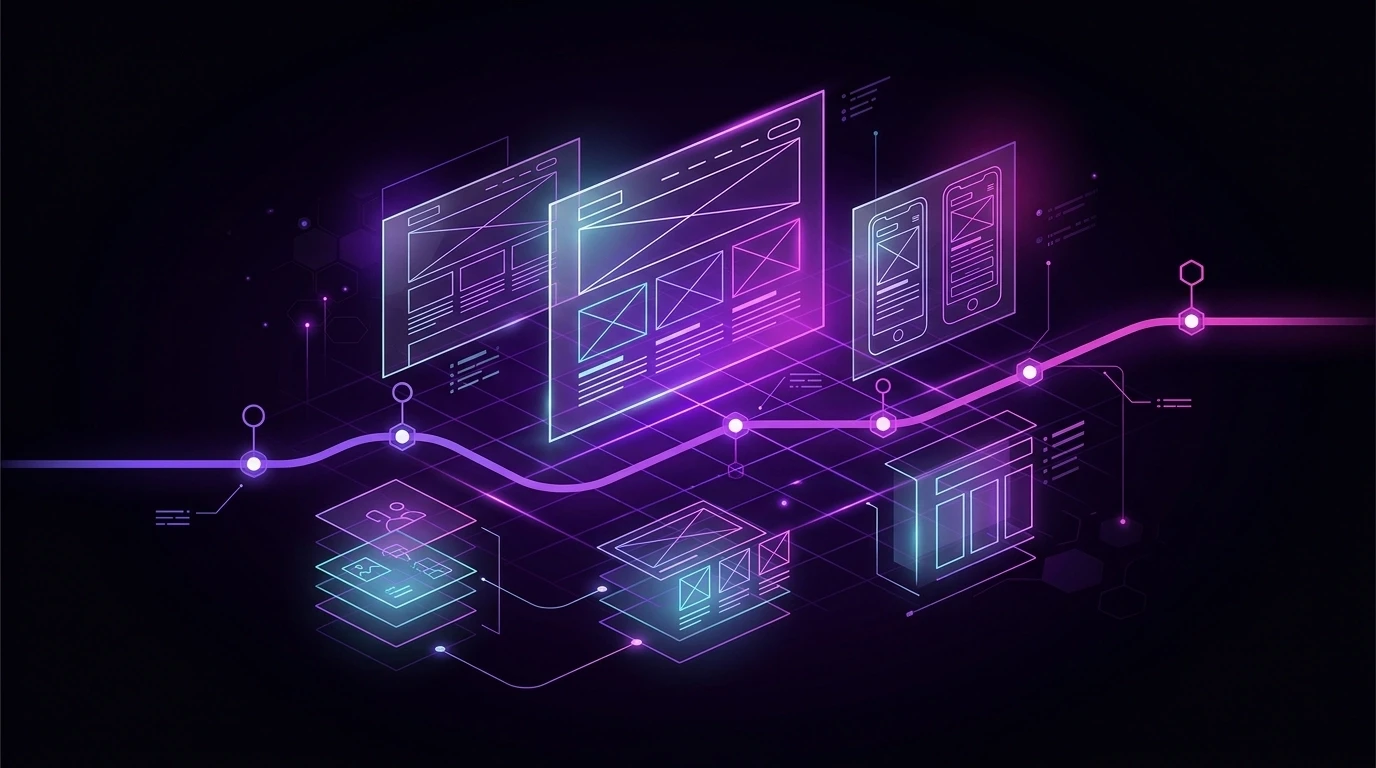
What transparent execution looks like in practice
A strong agency should be able to show you:
A clear project roadmap
Milestones and deadlines
A defined approval process
What’s included and what is not
How revisions are handled
Who owns each deliverable
Where performance measurement starts
That’s not bureaucracy. That’s oxygen.
The old way: deposit first, visibility later
Traditional agency models often look like this:
Discovery call
Proposal
Deposit
Silence
Occasional email
Massive reveal
Collective confusion
That model is outdated. It assumes the agency should disappear for months, then present a fully formed website like it descended from the mountain on stone tablets. The problem is simple: if the assumptions are off, the entire build is off.
The agile way: build in the light
Modern platforms like Framer, Webflow, and Shopify make iterative work faster and easier to review. That means a better process is available, and frankly, it should be expected.
With an agile agency, you should be able to review structure earlier, content direction sooner, and performance-critical decisions before they become expensive to change. That’s how high-performing teams reduce rework. They don’t wait until the house is painted to ask if you wanted a second floor.
Why transparency is a conversion issue, not just a comfort issue
This is where founders often underestimate the business impact.
When there’s no transparent process, the team spends less time refining the actual conversion machine:
the offer hierarchy
the CTA structure
the page flow
the tracking plan
the SEO architecture
the mobile user experience
Instead, energy gets burned on confusion management.
The numbers don’t lie. Confusion is expensive.
Expert Perspective: Process quality predicts outcome quality
If an agency cannot explain their workflow in plain English, that’s not charming. That’s a warning sign. Complex work should be made clear. A team that hides behind vagueness usually lacks operational discipline.
Strategic Anchor
A transparent process is not customer service fluff. It is the blueprint of trust that keeps your project aligned with speed, quality, and business goals.
3. Why the Naples/FL Tech Corridor Advantage Is Real
If you’re based in Florida, local proximity is not just about convenience. For the right kind of project, it is a strategic edge.
The state’s business landscape has evolved fast. Naples, Fort Myers, Sarasota, Tampa, Miami, and Orlando are all seeing continued growth in entrepreneurship, private investment, real estate development, healthcare innovation, hospitality, professional services, and digital-first brands. Florida is no longer just a relocation market. It’s a build market.
That creates a kind of regional momentum we can think of as the Naples/FL Tech Corridor: a network of fast-moving businesses, founder-led organizations, and modern service brands that need smarter digital infrastructure, not generic websites.
Why local proximity matters for high-stakes projects
For simple projects, remote can work fine.
For high-stakes projects, local often wins.
Those higher-stakes scenarios include:
a rebrand tied to growth capital or investor optics
a site launch that needs to sync with ad spend
a business serving regulated industries
a hospitality or luxury brand where perception matters immediately
a local lead generation machine that depends on geographic targeting
a founder-led company where the owner’s voice, reputation, and speed of decision-making are central
When your web partner is nearby, several advantages show up:
1. Faster decision cycles
There’s less lag, less misreading, and often a stronger rhythm to approvals. Small delays stack into big delays. Local accessibility helps break that pattern.
2. Better market intuition
A team that understands Florida buyer behavior can make better calls on messaging, trust signals, aesthetics, regional SEO, and location-specific offers.
3. Stronger accountability
Local relationships create healthier pressure. It’s harder to hide behind process jargon when your reputation lives in the same business ecosystem.
4. Better alignment for multi-channel growth
A site build connected to local SEO, paid media, CRM workflows, and content production benefits from a team that sees the full local market picture.
Naples, specifically, brings an interesting edge
Naples businesses often sit at a high-expectation intersection:
premium clientele
sophisticated design expectations
service-heavy industries
relationship-driven sales
strong local competition
increasing digital dependence
That means websites in this market need to feel polished and perform. Not one or the other.
A Naples founder doesn’t need a website that just looks expensive. They need one that behaves like a professional sales system.
> Golden Nugget: Proximity doesn’t replace expertise. But when expertise and proximity are combined, your project moves with more clarity, more accountability, and less drag.
Strategic Anchor
For Florida founders, local proximity matters most when the website is tied directly to growth, reputation, and speed. In those moments, a nearby strategic partner is not a luxury. It’s leverage.
4. Prioritize a Full-Stack Strategy (Beyond the "Pretty" Surface)
A common founder mistake is hiring for surface area instead of systems.
You think you need a designer. What you often need is a growth architect.
A site can be visually sharp and still fail in all the ways that matter: weak conversion pathways, no keyword strategy, poor messaging hierarchy, disconnected paid campaigns, slow load times, broken analytics, bad mobile UX, vague calls to action, and no lead-routing logic. That’s how businesses end up with what I call a luxury brochure problem: the site looks polished, but it doesn’t produce enough measurable value.
In 2026, your website design team in FL needs to understand the whole stack:
brand positioning, messaging, UX, SEO, CRO, analytics, automation, and paid media.
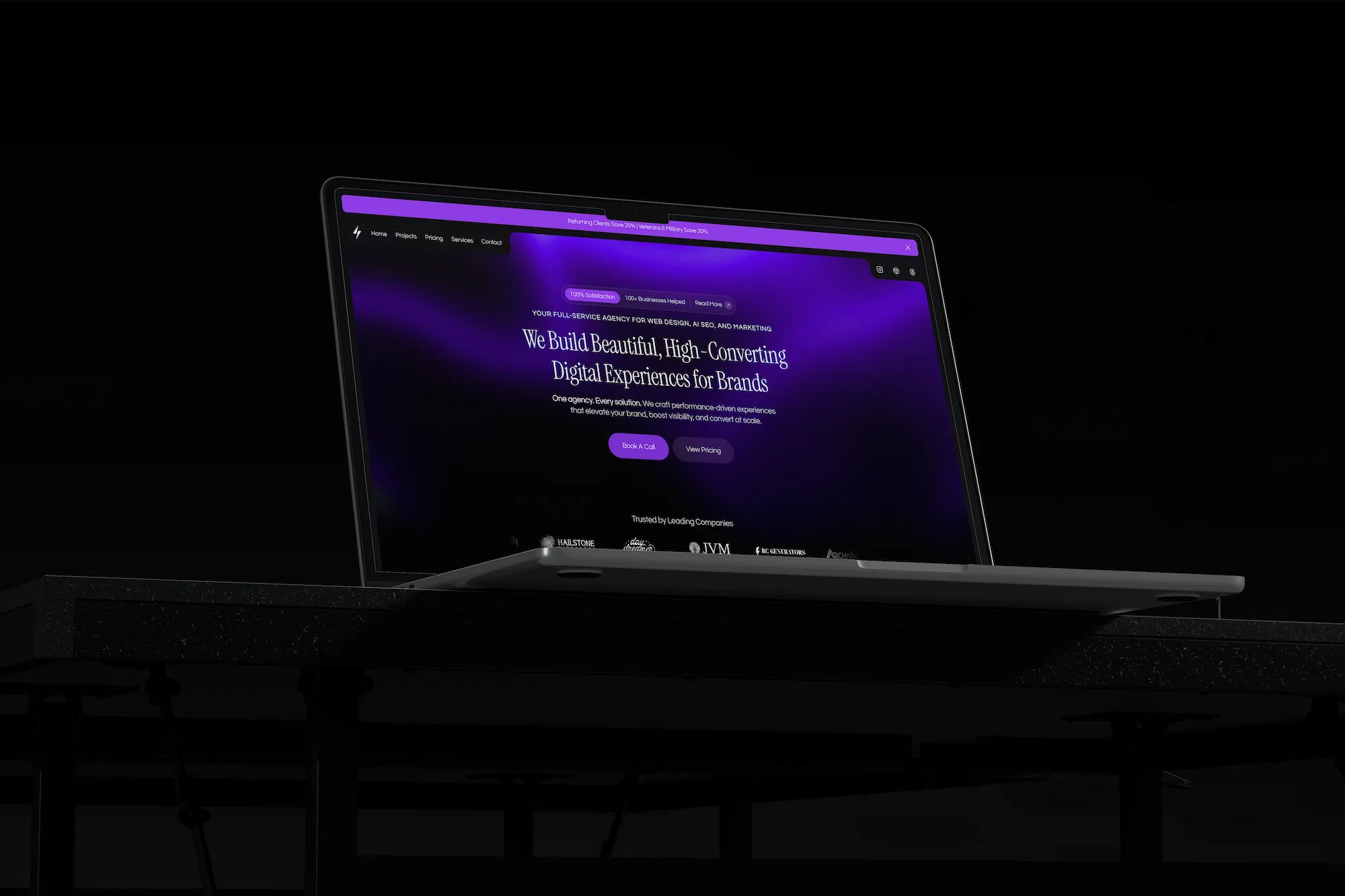
The Comparison Framework: Designer vs. Growth Partner
Your website should be the signature handshake of your brand. It needs to look credible, sound confident, and move buyers toward action. That’s why we connect Branding & Strategy directly into our web work instead of treating them like separate planets.
What a full-stack website strategy includes
A full-stack approach means the site is built as part of a growth system:
Brand clarity: What do you stand for? Why should a buyer trust you?
Messaging architecture: What should a first-time visitor understand in five seconds?
SEO structure: What pages deserve search visibility, and for which intent?
Conversion logic: What is the next step for each type of visitor?
Tracking readiness: Can we measure what matters once traffic lands?
Paid media compatibility: Is the site prepared for campaign-specific landing behavior?
CRM and automation integration: Where do leads go after form submission?
That is how you turn a website from an expense into an operating asset.
Real work matters more than mockups
One of the easiest traps in agency selection is getting impressed by conceptual mockups instead of shipped work. You want to see real builds, real interfaces, real structure, real clarity.
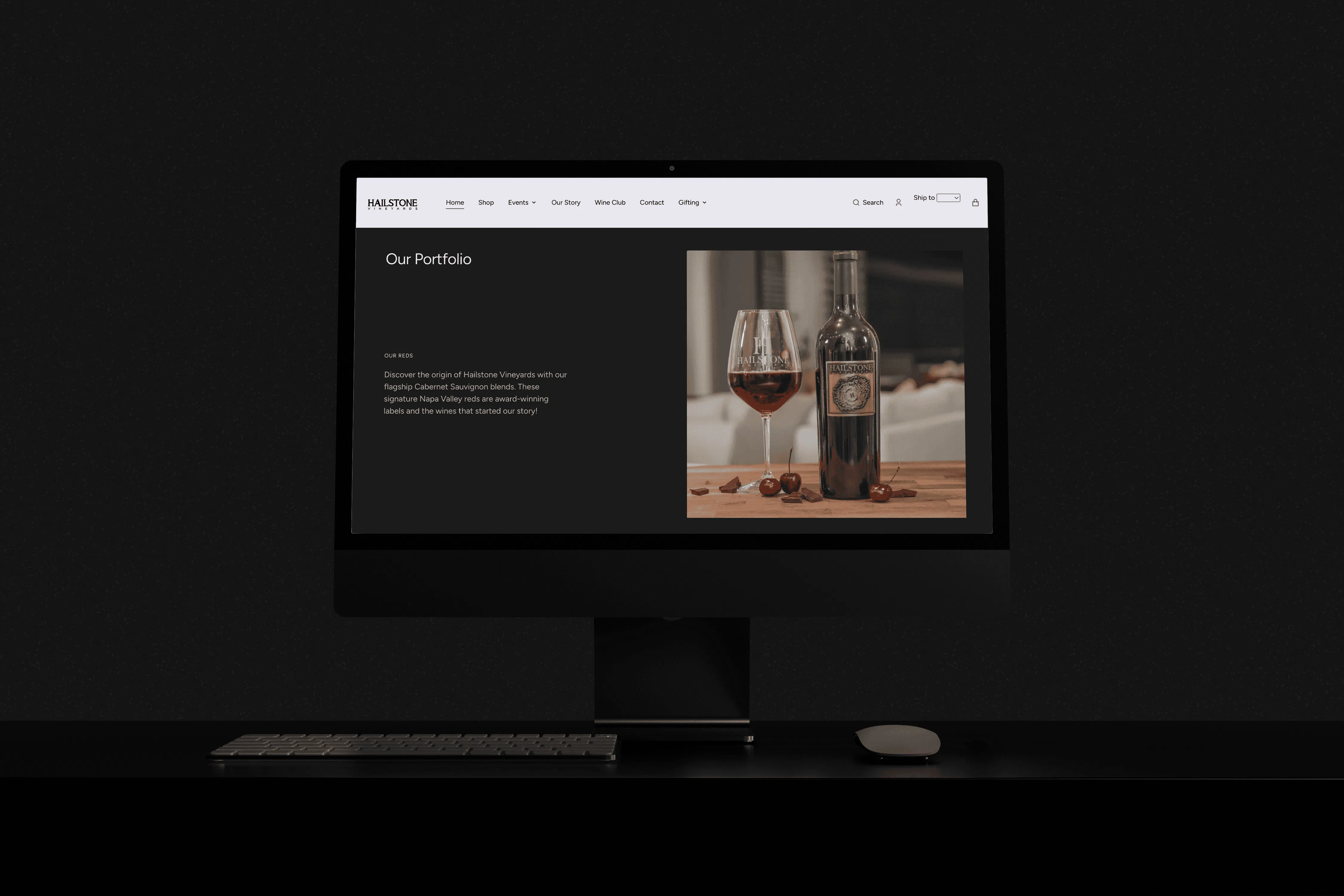
That’s especially true for founders in luxury, development, wellness, hospitality, and professional services, where the line between “beautiful” and “effective” needs to be managed carefully. A strong agency knows when to lean into visual storytelling and when to simplify for conversion.
Strategic Anchor
Pretty is not the assignment. Performance is. A full-stack strategy ensures your website supports how buyers discover, evaluate, and choose you.
5. Old-School Agency Models vs. Agile Digital Agencies
Let’s make this painfully clear.
Not all agencies are built the same, and the differences are not cosmetic. They affect budget efficiency, project speed, communication quality, and ultimately ROI.
The old-school agency model
This model usually has:
heavy overhead
bloated teams
layered approvals
account managers between you and the work
slow revision cycles
rigid retainers
long timelines
lots of presentations
not enough momentum
These agencies often look impressive from the outside because they’ve mastered the theater of process. Fancy decks. Complex org charts. Buzzwords stacked like Jenga blocks. But for a founder, this can feel like paying business-class prices to travel by canoe.
The agile digital agency model
An agile agency is usually:
leaner
more senior
faster to implement
clearer in communication
more collaborative
more measurable
less precious about ego
more focused on outcomes than ceremony
This is the model we believe in at Nextus. You don’t need unnecessary layers. You need clarity, senior execution, transparency, and speed.
Side-by-side comparison
Our Take: agility is not “cheap,” it’s efficient
Some founders hear “agile” and think “smaller” or “less established.” That’s the wrong frame.
Agility means fewer wasted motions. It means the engine is tuned. It means expertise is closer to action. It means your project doesn’t sit on a desk while five internal stakeholders debate a button color like it’s foreign policy.
Strategic Anchor
If your agency model creates drag, your website project will inherit that drag. In 2026, speed with strategic control is the model that wins.
6. The Technical Deep Dive: Framer vs. WordPress for Florida Founders
This is one of the most important platform discussions a founder can have, and it’s amazing how often it gets reduced to “WordPress is popular” versus “Framer looks cool.” That’s not strategy. That’s software small talk.
The right question is: Which platform gives your business the strongest mix of speed, security, flexibility, maintenance efficiency, and growth readiness?
WordPress: powerful, common, but often bloated in practice
WordPress powers a huge portion of the internet. There’s a reason for that. It’s flexible, widely supported, and capable of handling complex content environments. In the right hands, it can still be a valid solution.
But here’s the catch: founders rarely experience WordPress in its best-case form. They experience it in the wild.
That often means:
too many plugins
template debt
update conflicts
security patching
hosting variability
speed issues
admin clutter
ongoing developer dependence
WordPress is like buying a large property with a lot of renovation potential. Great if you have the right crew and a clear plan. Risky if you just want the lights to turn on and the roof not to leak.
Framer: fast, modern, performance-oriented
Framer is built for speed, modern design execution, and streamlined publishing. For many startup, service, and growth-stage brands, it offers a cleaner path to a high-performance site without the baggage that often accumulates in legacy WordPress setups.
Framer tends to shine when you need:
fast launch timelines
premium visual design
strong performance
easy editing
lower maintenance burden
streamlined page creation
clean interaction design
modern SEO implementation
For many founder-led brands, Framer feels less like maintaining machinery and more like operating a tuned performance vehicle.
Comparison Framework: Framer vs. WordPress
Speed is not vanity
Speed affects:
bounce rate
conversion rate
crawl efficiency
paid traffic efficiency
mobile performance
brand perception
A slow site is like a storefront with a jammed front door. People may still get in. Some won’t bother.
Security is not optional
Florida businesses operating in healthcare-adjacent, professional service, finance, or lead-heavy environments should care deeply about attack surfaces and maintenance discipline. A plugin-heavy WordPress stack can create more exposure if not actively managed.
Maintenance costs are where founders get surprised
This is the part that bites later.
A cheaper WordPress build can become more expensive over time if you’re paying for:
plugin licensing
developer fixes
update troubleshooting
hosting upgrades
performance patching
malware cleanup
content edits that should have been easy
That’s why platform choice should be viewed as an operational decision, not just a design decision.
> Golden Nugget: Your CMS is not just where your website lives. It’s the house rulebook for every future edit, update, campaign, and technical headache.
Expert Perspective
At Nextus, we don’t force the same platform on every project. That would be lazy. We recommend the stack that best supports your goals. But for many Florida founders focused on speed, cleaner maintenance, and premium presentation, Framer is increasingly the smarter move.
Strategic Anchor
Choose the platform that supports your growth model, not the one your last developer happened to like. In a competitive market, technical efficiency compounds.
7. AI SEO: The Modern "Crawl Budget" Strategy
If a web design team tells you SEO comes later, that is your cue to leave politely and quickly.
In 2026, AI SEO is not a separate service hanging off the side of a website project. It is part of the framing, wiring, and structural plan. Search visibility begins with architecture.
Your site’s hierarchy, internal linking, page intent, performance, structured content, metadata, entity clarity, and crawl efficiency all influence whether search engines can understand and trust what you publish. If that sounds technical, good. It is. And it matters.
Understanding the technical foundation
Psychographics over demographics: We don’t just think about age or location. We think about motivation, pain points, urgency, objections, and buyer readiness.
Indexing and crawl budget: Search engines allocate limited attention to your site. A messy site wastes that attention. A lean site uses it strategically.
Intent mapping: Different pages should serve different types of searches, from informational to transactional.
Structured clarity: Headings, schema, page hierarchy, and topical alignment matter more than ever.
Automation support: Integrated AI Automation can support lead routing, nurture flows, content workflows, and operational follow-up.
Why SEO architecture must be baked in early
If SEO is bolted on later, you usually get one of two outcomes:
awkward retrofitting
expensive rework
Good SEO doesn’t just chase keywords. It shapes:
navigation
page templates
content depth
internal links
headline strategy
local landing pages
FAQ structures
media optimization
That’s why modern SEO work starts in planning, not post-launch.
For Florida founders, local intent is huge
If you’re targeting a geography-driven service area, your site needs to reflect actual buyer language and actual regional search behavior. That includes city modifiers, service intent, trust cues, and localized supporting content.
A site trying to rank in Naples, Miami, Tampa, or Orlando with generic copy is like showing up to a local event wearing a name tag that says “Business Person.”
Strategic Anchor
Don’t just build for human visitors. Build for the systems that help those visitors discover you. Search visibility is part of your foundation, not a decorative add-on.
8. The 2026 Conversion Landscape: How AI-Driven Search Changes What Your Homepage Must Do
This is one of the biggest shifts founders need to understand right now.
Search is no longer just “ten blue links and a prayer.” With AI-driven search experiences, summarized results, answer panels, and evolving search behavior patterns, your homepage has to work harder and faster. In many cases, people will know about you before they ever land on your site. That means when they do arrive, they’re already in evaluation mode.
Your homepage is no longer just an introduction. It is a trust compression device.
What AI-driven search changes
When users encounter summaries, previews, snippets, citations, and AI-assisted discovery paths, they often arrive with:
higher expectations
less patience
more context
more skepticism
stronger comparison behavior
That means your homepage needs to answer key questions quickly:
Who are you?
Who do you help?
What do you do differently?
Why should I trust you?
What should I do next?
No fluff. No vague slogans floating over a drone shot. No “we craft innovative digital experiences” nonsense. We all survived the 2010s. We don’t need to go back.
What a 2026 homepage should include
1. Immediate positioning clarity
Your above-the-fold messaging should make it painfully obvious what you do and for whom.
2. Strong trust signals
Think:
proof of work
client logos
niche credibility
outcomes
testimonials
industry fit
founder-facing language
3. Clear conversion pathways
Some visitors want to book a call. Others want to see work. Others want to understand services. Your homepage should route each of them cleanly.
4. Strong supporting content structure
AI search systems favor clarity, relevance, and consistency. Your homepage should connect logically to deeper service pages, case studies, and supporting articles.
5. Mobile-first trust
A shocking amount of founder research still happens on mobile. If the mobile experience feels cramped, slow, or ambiguous, confidence drops fast.
The new homepage job description
Your homepage now needs to:
establish authority
validate relevance
reduce uncertainty
guide next steps
support branded search behavior
reinforce what users may have already seen in search summaries or social touchpoints
Think of it as the front lobby of your digital headquarters. If someone walks in already semi-informed, the lobby should confirm they’re in the right building immediately.
Expert Perspective
In the AI-search era, the homepage is less about “telling your whole story” and more about creating instant confidence that the rest of your story is worth exploring.
Strategic Anchor
If AI-driven search changes how people discover you, your homepage must change how quickly it establishes trust. Clarity is now a conversion multiplier.
9. Paid Ads + Website Design: Why the Best ROI Comes From Integration
A major mistake founders make is separating ad strategy from website strategy.
The ads team runs Google or Meta.
The web team builds the site.
Analytics gets set up later.
Attribution gets fuzzy.
Everyone smiles politely while the budget leaks through the floorboards.
That siloed model kills efficiency.
At Nextus, we treat Paid Advertising and site design as parts of the same engine. Because they are. If you’re spending on Google Ads or Meta Ads, the website has to be designed to receive that traffic intentionally.
What integration looks like
When paid media and site design are aligned, we can shape:
landing page structure
message match from ad to page
CTA hierarchy
form friction
mobile behavior
scroll depth
trust elements
event tracking
conversion attribution
remarketing readiness
That’s how you improve actual ROI instead of just admiring click-through rates.
Google Ads requires intent alignment
Paid search traffic often arrives with stronger transactional intent. These users are looking for a solution, not a brand poem.
So the page should reflect that:
direct headline relevance
clear service match
fast-loading structure
low-friction call to action
visible proof
no unnecessary detours
Meta Ads requires attention design
Meta traffic behaves differently. People are interrupted, not actively searching. That means the landing experience has to bridge curiosity into intent.
That often means:
stronger visual storytelling
clearer emotional payoff
concise explainer sections
social proof
softer entry-point offers when appropriate
Tracking is where good agencies separate themselves
A polished website with weak tracking is like driving at night with the headlights off. You’re moving, but you don’t know enough.
Integrated setup should include a clear plan for:
primary conversion events
micro-conversions
form submissions
call clicks
calendar bookings
thank-you page logic
pixel/event implementation
UTM structure
CRM destination mapping
Our Take: design without attribution is incomplete
If a site is intended to support growth, then analytics and tracking are not “technical add-ons.” They’re part of the design architecture. Founders should expect this.
Strategic Anchor
Ad dollars work harder when the site is designed as the destination, not treated like an unrelated brochure. Integration turns traffic into measurable opportunity.
10. Focus on Measurable Scalability (The Signature Handshake)
Your business is not static. Your website shouldn’t be frozen in amber either.
One of the most frustrating founder experiences is launching a site that looks good, then realizing every simple update requires a ticket, an invoice, and a mild emotional support session. That kind of dependency creates operational drag and kills momentum.
We build for scale. Whether we are working on a JVM Builds project or a luxury brand like Hailstone Vineyards, the goal is the same: create a site that performs now and can evolve later.
What scalable design actually means
A scalable website should make it easier to:
add service pages
publish content
support new campaigns
create landing pages
adjust messaging
expand SEO targeting
integrate new automations
improve tracking over time
That requires a thoughtful system, not just attractive screens.
Signs a site was not built for scale
Watch for these red flags:
every edit requires technical help
templates are inconsistent
analytics are unclear
pages are hard to duplicate cleanly
forms aren’t tied to workflows
content structure is messy
campaign traffic has nowhere specific to go
That kind of setup traps the business. It turns the website into a bottleneck when it should be an accelerator.
Strategic Anchor
Every design choice should lead back to a business outcome. If it doesn’t improve usability, visibility, conversion, or operational efficiency, it’s just digital clutter wearing nice shoes.
11. Founder's Checklist for the First Discovery Call
A discovery call should not feel like an audition where you sit quietly and hope the agency likes your budget. This is your due diligence moment.
You are interviewing a potential strategic partner. Show up like it.
Bring these questions into the first call
About execution
Who will actually work on my project?
Is the work done in-house or outsourced?
Who handles strategy, copy, design, development, and SEO?
About process
What does your project timeline typically look like?
How do approvals and revisions work?
How often will I get updates?
What can delay the timeline?
About platform decisions
Why would you recommend Framer, WordPress, Webflow, or Shopify for my business?
What will maintenance look like after launch?
How easy will it be for my team to make edits?
About growth strategy
How do you approach SEO during the web build?
How do you think about conversion optimization?
Can the site support paid ads and campaign landing pages?
About tracking and ROI
What analytics and tracking do you include?
How do we measure success after launch?
Can forms, CRM, and automation be integrated?
About fit
Have you worked with businesses like mine?
What would you push back on if you were in my position?
What do most founders underestimate about a project like this?
What good answers sound like
Good answers are specific. Practical. Clear. They sound like a team that has done this before and can explain it without hiding behind jargon.
What weak answers sound like
Weak answers are vague. Overly salesy. Defensive. Or full of “it depends” without any actual framework behind the dependency.
> Golden Nugget: A discovery call is not about being impressed. It’s about reducing risk.
Strategic Anchor
The right questions protect your budget, your timeline, and your growth plan. Founders who lead the discovery conversation usually make better agency decisions.
Conclusion: Stop Searching, Start Scaling
Hiring a website design team in FL shouldn’t feel like rolling dice in a velvet conference room. It should be a strategic investment tied to revenue, positioning, speed, and long-term usability.
If you’re a founder in Naples, Miami, Tampa, Orlando, Sarasota, Fort Myers, Jacksonville, or anywhere else in Florida, here’s the bottom line:
You need more than a vendor.
You need a team that:
keeps execution senior-level and in-house
works with speed and transparency
understands the advantage of local proximity for high-stakes projects
can explain Framer vs. WordPress like adults
builds for AI SEO and AI-driven search behavior
integrates paid ads, tracking, and conversion design
creates a site that can actually scale with your business
At Nextus Digital Solutions, we don’t just build websites. We build growth engines with the technical foundation, strategic clarity, and operational transparency founders actually need.
Ready to stop guessing and start growing?
Explore our recent projects or Contact us today to see how we can transform your digital presence with speed, precision, and senior-level execution.
Strategic Summary for Founders:
Senior Talent: Ensure the work stays in-house.
Modern Stack: Use Framer or Webflow for speed and performance when it fits the business.
SEO-First: If it's not optimized from the start, it's invisible.
Transparency: Demand a clear blueprint and real-time updates.
Platform Logic: Understand the long-term cost of WordPress vs. the efficiency of Framer.
Ads Integration: Your website and paid media should work as one system.
ROI Focus: Design is a tool, not the goal.
The numbers don’t lie. Your competitors are already upgrading. Make sure your digital foundation is built to last, built to convert, and built to move as fast as your business does.
Looking for more insights on Florida’s digital landscape? Check out our latest articles for deep dives into AI SEO and marketing automation.